Introduction
Disclosure: This post may contain affiliate links. We may earn a commission at no extra cost to you.
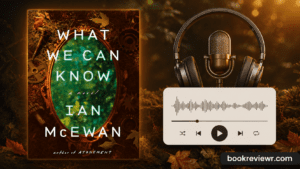
There are novels that entertain, and then there are novels that unsettle you in the best possible way — books that plant a question in your mind and refuse to let it go long after the final page. Ian McEwan’s What We Can Know belongs firmly to that second category. Published in September 2025, this genre-blending masterwork is already drawing comparisons to McEwan’s beloved earlier novel Atonement, and the praise is entirely deserved.
At its heart, What We Can Know is a story about a lost poem, a dinner party, and the slippery nature of truth. But peel back those layers, and you will find something far more ambitious: a meditation on climate catastrophe, human memory, the mythology we build around the past, and whether knowledge itself can ever be trusted. This is McEwan at his most intellectually daring.
Whether you are a devoted fan of literary fiction, a reader drawn to speculative ideas, or simply someone who wants a novel that genuinely makes you think, What We Can Know delivers richly on every front.
About the Author
Ian McEwan was born in Aldershot, England, and has spent five decades establishing himself as one of the most important voices in contemporary British literature. His debut short story collection, First Love, Last Rites, won the Somerset Maugham Award in 1975. From there, his career has only grown in stature and ambition.
He won the Booker Prize in 1998 for Amsterdam, and his novel Atonement became a global cultural phenomenon, later adapted into an acclaimed film. Other landmark works include The Child in Time, Enduring Love, Saturday, On Chesil Beach, and Machines Like Me. McEwan received a CBE in 2000 for his contributions to literature.
His writing style is distinguished by psychological precision, a deep interest in moral philosophy, and an almost scientific attention to cause and effect. He rarely wastes a sentence. What We Can Know is his eighteenth novel, and it demonstrates that even after decades at the top of his craft, McEwan still has bold new directions to explore.
Summary
The novel opens in 2014, at a candlelit dinner party in England. The gathering is intimate — close friends and literary colleagues assembled to celebrate the birthday of Vivien Blundy, wife of the celebrated poet Francis Blundy. As the evening unfolds, Francis does something extraordinary: he reads aloud an original poem, “A Corona for Vivien,” composed as a private gift to his wife. Those present describe it as the finest work of his career, a poem that rivals T.S. Eliot’s The Waste Land. There is only one copy — and it disappears that very night.
Jump forward one hundred years. It is 2119, and England has been dramatically reshaped by environmental catastrophe. Rising seas have swallowed much of the south. A nuclear accident has accelerated global collapse. The people of this future world look back on the early 21st century — what they call “the Derangement” — with a mixture of fascination and horror, marveling at how a civilization that knew about climate change simply failed to act.
In this waterlogged future, Thomas Metcalfe, a solitary scholar at the fictional University of the South Downs, becomes obsessed with recovering Francis Blundy’s lost poem. His search leads him through archives, emails, journal entries, and the intimate correspondence of people long dead. What begins as an academic quest slowly reveals something far darker: entangled love affairs, long-buried secrets, and a brutal crime hiding in plain sight beneath the poetry.
“What we can know is not always the same as what we should know before claiming to have grasped the truth.”
Main Characters
Key Themes and Messages
The limits of what we can know. The title is not accidental. McEwan builds the entire novel around the terrifying gap between what happened and what we can reconstruct from evidence. Thomas pores over archives and believes he understands the people of 2014 — only to have that understanding overturned again and again. It is a sobering lesson about the nature of historical knowledge, biography, and memory.
Climate change and collective failure. McEwan’s portrayal of 2119 is chilling precisely because it is so understated. The future characters have a name for our era — “the Derangement” — and the term captures something awful: that an entire civilization knew what was coming and still could not bring itself to act. McEwan doesn’t preach; he simply shows the consequences, and the effect is devastating.
The mythology of the past. Thomas romanticizes the early 21st century as a golden age of freedom and possibility, even as the reader — who actually lives in that era — sees its chaos clearly. McEwan turns nostalgia into an object of study, exposing how the past is always purified and simplified by those who didn’t live through it.
Art, poetry, and what survives. What does it mean for a poem to disappear? The novel meditates beautifully on why we care so deeply about artistic legacy, and what the act of creating — and losing — a work of art says about our need to be known and remembered.
Writing Style and Narrative
McEwan writes with the kind of quiet authority that makes other novelists look nervous. His sentences are clean and exact, never overworked, yet somehow capable of carrying enormous emotional and intellectual weight. The two-part structure — 2014 and 2119 — is unusual and initially disorienting, but it earns its complexity by the novel’s second half, when the construction reveals its full purpose and the pages begin to fly.
The pacing is deliberately patient. McEwan is not interested in cheap suspense. He is interested in building a kind of slow, mounting dread — the sense that the more Thomas learns, the less certain he becomes. For readers accustomed to faster literary thrillers, the opening chapters may require patience. But those who surrender to McEwan’s rhythm will find themselves genuinely gripped by the final act.
The prose shifts register subtly between the two timelines. The 2014 sections feel warm and socially observant, full of the prickly comedy of dinner party dynamics. The 2119 sections carry a more melancholy, elegiac quality — the voice of a civilization that knows it is living in an aftermath.
What Makes It Special
McEwan has described What We Can Know as science fiction “without the science,” and that phrase unlocks something essential about the book. It has the speculative machinery of dystopian fiction — the flooded landscape, the transformed society — but it uses all of that not for genre thrills but for literary and philosophical exploration. The effect is genuinely unusual. There are very few novels that could plausibly sit on the same shelf as both Never Let Me Go and Atonement, but this is one of them.
The literary detective story at the novel’s core is brilliantly constructed. The missing poem functions as a kind of narrative black hole — a void around which the entire story orbits and which gives meaning to everything. And when the full picture of what happened at that 2014 dinner party finally assembles itself, the revelation is both surprising and, in retrospect, entirely inevitable. That is the mark of masterful plotting.
Pros and Cons
- Exceptional prose quality throughout
- Brilliantly plotted literary mystery
- Climate change treated with rare subtlety
- The second half is genuinely gripping
- Rich intellectual and philosophical depth
- Vivien is a memorably complex character
- Slow-burning opening may test patience
- Characters sometimes serve ideas over life
- Future world-building lacks full urgency
- The two-part structure can feel uneven
Who Should Read This Book
This novel is ideal for readers who love literary fiction with intellectual substance — the kind of book you want to discuss with someone else immediately after finishing. Fans of McEwan’s earlier work, particularly Atonement and The Child in Time, will feel immediately at home. Readers drawn to speculative fiction with a humanist soul — think Kazuo Ishiguro’s Never Let Me Go — will also find much to love here.
If you enjoy novels that sit at the crossroads of genres — part mystery, part love story, part philosophical meditation, part climate fiction — What We Can Know is a rare and rewarding find. It is not a light weekend read, but it is exactly the kind of book that justifies the effort of serious reading.
Final Verdict
What We Can Know is a bold, ambitious, and deeply rewarding novel. It will not be to every taste — its patience, its philosophical weight, and its unusual structure demand a committed reader. But for those willing to meet McEwan on his own terms, it offers something genuinely rare: a novel that is simultaneously a gripping mystery, a love story, an ecological warning, and a profound meditation on the nature of knowledge itself. It confirms, once again, that Ian McEwan remains one of the most vital and daring novelists writing in English today.