Introduction
Disclosure: This post may contain affiliate links. We may earn a commission at no extra cost to you.
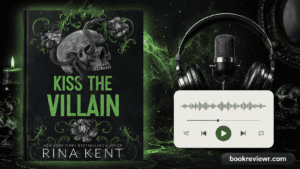
Some books knock you sideways. Not gently — but in that breathless, slightly unsettling way where you finish a chapter at 2 a.m. and realize you’ve lost all ability to put it down. Kiss the Villain by Rina Kent is exactly that kind of book. It’s the sort of dark romance that wears its shadows proudly, making you root for people you probably shouldn’t and feel things you definitely weren’t prepared for.
This Kiss the Villain review is for readers who already love morally grey characters and enemies-to-lovers tension, and for the curious souls wondering whether this book lives up to the buzz it’s generated in the romance reading community. Spoiler: it very much does — with a few caveats worth knowing.
About the Author
Rina Kent is a bestselling author known for her dark, emotionally intense romance novels that often feature morally complex protagonists, obsessive love interests, and lush, atmospheric storytelling. With a devoted fanbase across platforms like Goodreads and BookTok, Kent has built a reputation for writing love stories that don’t play it safe. Her books rarely offer easy comfort — instead, they offer the thrill of intimacy wrapped in danger, and Kiss the Villain is no exception.
Kent’s ability to write from inside the minds of flawed characters — to make you feel their distorted logic as something almost rational — is one of her greatest strengths. Readers familiar with her backlist will feel right at home here. Newcomers may be startled, but they’ll likely be hooked just the same.
Spoiler-Light Summary
At its core, this Kiss the Villain summary centers on two people who should, by every sensible measure, stay far apart. Our heroine is drawn into the orbit of a man who is dangerous in every sense of the word — not cartoonishly so, but with that quiet, calculated menace that feels far more real and far more thrilling. He wants something from her. She has no idea what she’s gotten into. And somewhere between threat and desire, the line between villain and protector starts to blur in fascinating ways.
The plot moves on twin rails: a slow-building suspense thread that keeps things tense, and an emotional arc that strips both characters down to raw, vulnerable cores. The romance doesn’t rush — it simmers, then scalds. Kent is careful not to give readers easy resolution early on, which means every breakthrough feels genuinely earned.
“The line between danger and desire has never been drawn so deliciously thin.”
Main Characters
Any worthwhile Kiss the Villain analysis has to spend real time with its characters, because they are undoubtedly the book’s greatest asset.
She doesn’t arrive as a damsel. She’s guarded, perceptive, and carrying wounds that explain — without excusing — her choices. Her internal voice is one of the most compelling aspects of the novel.
Cold, deliberate, and magnetic. His darkness isn’t performed — it’s structural, woven into how he sees the world. Yet Kent grants him moments of startling tenderness that reframe everything you thought you understood about him.
The secondary characters function less as fully realized individuals and more as atmospheric pieces — but they do their job well, shaping the world around the central duo and adding pressure where the plot needs it.
What makes the Kiss the Villain characters work is the psychological credibility Kent invests in them. Neither lead is a fantasy cutout. They’re people shaped by damage, and watching them navigate that damage — together, reluctantly, dangerously — is what gives the book its emotional weight.
Themes and Messages
The Kiss the Villain themes are rich and layered, and part of what elevates the novel beyond a simple dark romance into something more resonant.
- Power and vulnerability: The book obsessively interrogates who holds power in a relationship and how quickly that can shift. Kent doesn’t romanticize control — she examines it.
- Trauma and its distortions: Both leads are shaped by their pasts, and the novel treats that honestly. Love here isn’t a cure — it’s a complication that forces characters to confront themselves.
- Moral ambiguity: Kent refuses to neatly categorize her love interest as redeemable or irredeemable. He occupies a grey zone, and the book is more interesting for it.
- Obsession vs. love: The novel asks, quietly but insistently, whether there’s a difference — and whether the distinction even matters when the feeling is mutual.
- Identity and self-preservation: The heroine’s arc is fundamentally about what she’s willing to give up and what she absolutely cannot.
Writing Style and Pacing
Rina Kent writes with a kind of controlled intensity that suits the material perfectly. Her prose isn’t flowery or overwritten — it’s precise, atmospheric, and occasionally razor-sharp. She knows when to linger and when to cut, and that rhythm gives the book a pulse that keeps you reading long past when you intended to stop.
The pacing in the first half is deliberate — some readers may find it slow, but Kent is building pressure. By the midpoint, the tension has accumulated to the point where every scene crackles with it. The final third moves quickly, perhaps a little too quickly, but the emotional payoff is largely worth the wait.
Dialogue is one of her particular strengths here. The verbal sparring between the leads is some of the most entertaining writing in the book — barbed, loaded with subtext, and often doing more emotional work than the internal monologue surrounding it.
What Makes the Book Special
Dark romance as a genre is crowded — there’s no shortage of brooding anti-heroes and reluctant heroines. What distinguishes Kiss the Villain is the psychological seriousness with which Kent treats both her characters and her readers. She doesn’t ask you to simply accept the villain’s behaviour — she asks you to understand its architecture. That’s a different, more demanding kind of storytelling.
There’s also something to be said for the romantic tension Kent builds. The will-they-won’t-they energy here isn’t manufactured through miscommunication or cheap plot devices — it grows organically from who these two people are and why being together is genuinely complicated for both of them. When the connection finally crystallizes, it feels inevitable in the best way.
Pros and Cons
What Works
- Psychologically rich characters
- Slow-burn tension that genuinely pays off
- Sharp, atmospheric prose
- Dialogue that crackles with subtext
- Thematically ambitious storytelling
- Complex moral landscape throughout
Worth Noting
- First-half pacing may test patience
- Secondary characters feel underdeveloped
- The finale rushes slightly
- Content warnings — dark themes throughout
Who Should Read It
This book is for you if you enjoy dark romance without apology — if morally grey heroes intrigue rather than repel you, if you like your love stories complicated, and if you find something perversely satisfying about rooting for a couple who probably shouldn’t work but absolutely does on the page.
It’s also a good pick for readers who’ve enjoyed Rina Kent’s previous work, fans of authors like Ana Huang (for the addictive quality) or Penelope Douglas (for the darker edges), and anyone who’s been burned by sanitized romance and wants something with more friction.
If you need your heroes clearly heroic and your romances conflict-free, this one isn’t for you — and that’s perfectly fine. But for readers who lean into the grey, Kiss the Villain will feel like exactly what you’ve been looking for.
Final Verdict
Kiss the Villain is a confidently crafted dark romance that earns its emotional beats through genuine character work rather than cheap shortcuts. It’s not a perfect book — the pacing wobbles and the ending feels slightly rushed — but the central relationship is so compelling, and the thematic underpinnings so thoughtfully handled, that these feel like minor complaints in the end.
Rina Kent has written something genuinely immersive here. A book that gets under your skin in ways you don’t entirely expect and lingers well after the final page. Highly recommended for fans of the genre, and a worthy introduction for the uninitiated.