Introduction: Why Painted Scars Is Turning Heads
Disclosure: This post may contain affiliate links. We may earn a commission at no extra cost to you.
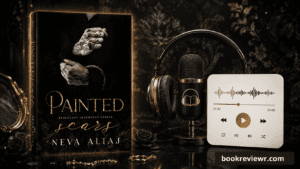
If you’ve spent any time in the dark romance community lately, you’ve almost certainly stumbled upon the name Painted Scars. Neva Altaj’s debut novel in the Perfectly Imperfect series has quietly become one of the most-talked-about books in the genre — and for very good reason. It’s the kind of story that sneaks up on you, pulling you deeper chapter by chapter until you realize you’ve forgotten to breathe.
This Painted Scars review is for readers who want the honest truth before committing their time and heart to a book. And let me say upfront: this one is worth every minute.
At its core, Painted Scars is a mafia romance — but it’s also so much more than that. Altaj weaves together trauma, trust, vulnerability, and fierce love in a way that feels genuinely human. It’s intense, yes. But it’s also quietly tender in the spaces between the chaos. Readers who enjoy emotionally complex stories, morally grey characters, and slow-burn tension wrapped in a gritty world will find a great deal to love here.
About the Author: Who Is Neva Altaj?
Neva Altaj is a contemporary romance author who has built a devoted readership through emotionally charged storytelling and characters that feel lived-in and real. Though relatively new to the publishing scene compared to some long-running names in the genre, her impact has been swift and significant. The Perfectly Imperfect series — of which Painted Scars is the first installment — established her as a voice to watch in dark and mafia romance.
What sets Altaj apart from many in this crowded genre is her restraint. She understands that darkness is most powerful when it has room to breathe — when the reader feels the weight of silence as much as the roar of conflict. Her prose is clean and purposeful, never indulgent for its own sake. She writes flawed, complicated characters with empathy and nuance, giving even the most morally complicated figures a beating heart the reader can understand, if not always excuse.
Altaj has continued to expand the Perfectly Imperfect universe with subsequent books, each one building on the world she established in Painted Scars. Her growing catalog speaks to her consistency as a storyteller and the loyalty she’s earned from readers who return for her particular blend of raw emotion and romantic tension.
Painted Scars Summary: What Is This Book About?
This Painted Scars summary will keep the major spoilers safely locked away — because discovering this story’s layers on your own is half the joy. What we can say is this: the book centers on a woman named Milene, who finds herself entangled with Luca Rossi, a powerful and dangerous man embedded deeply in the world of organized crime.
Milene is not a typical romance heroine. She carries visible scars — both physical and emotional — and rather than hiding from them, Altaj places them front and center as a defining part of who she is. There is no “flaw” to overcome here. Milene’s scars are simply her. What she must navigate, instead, is the terrifying act of letting someone else see her fully — past the armor, past the silence she’s built around herself over years.
Luca, meanwhile, is a man accustomed to control. His world operates on power and precision, and tenderness is not a language he speaks easily. But something about Milene reaches past his walls in ways he doesn’t entirely understand or welcome at first. The push and pull between them forms the emotional engine of the novel, and Altaj keeps the tension simmering masterfully from the very first chapter.
The plot itself moves at a confident pace — never rushed, never stagnant. Alongside the romance, there are genuine stakes: danger, loyalty, secrets, and the constant hum of a world where trust is the most dangerous thing you can offer someone.
Main Characters in Painted Scars
The Painted Scars characters are arguably the novel’s greatest achievement. Altaj populates her story with people who feel fully formed — complicated, contradictory, and utterly compelling.
Milene
Milene is the quiet storm at the center of this story. Her scars — both the ones the world can see and the ones hidden in the architecture of her inner life — shape every interaction, every hesitation, every moment of unexpected courage. She is not waiting to be saved. She is learning, slowly and painfully, to trust. Altaj writes her with a sensitivity that never tips into pity, which is a difficult balance to strike and one the author handles beautifully.
Luca Rossi
Luca is the quintessential morally grey love interest done right. He operates in darkness without apology, yet his tenderness toward Milene reveals a man capable of something far more fragile than his reputation suggests. Altaj never asks the reader to forget what he is — she simply shows us that people are more than the worst things about them, and that love, when it arrives in unexpected places, changes both parties whether they want it to or not.
The World Around Them
The secondary characters in Painted Scars are more than furniture. Altaj sketches in the mafia world with enough detail to feel credible without overwhelming the central romance. The loyalties, rivalries, and unspoken codes of this world create a setting with genuine texture — and several supporting figures clearly have their own stories waiting to be told in subsequent books.
Key Themes and Messages in Painted Scars
A thorough Painted Scars analysis reveals a book that is thematically richer than its genre trappings might initially suggest. Altaj is genuinely interested in ideas — about bodies, about shame, about what it means to be seen by another person — and she embeds them naturally into the narrative rather than telegraphing them.
Visibility & Shame
The novel asks what it truly means to be seen — and how terrifying that can be when you’ve spent years hiding parts of yourself from the world.
Trust as Vulnerability
Both protagonists have built elaborate defenses. The slow dismantling of those walls forms the emotional heart of the story.
Healing on Your Own Terms
Altaj refuses easy recovery arcs. Healing here is messy, non-linear, and deeply personal — which makes it feel true.
Power & Tenderness
The contrast between Luca’s dangerous exterior world and the private gentleness he shows Milene explores how people contain multitudes.
The Painted Scars themes are never heavy-handed. They live in the details — in a glance held a beat too long, in a word chosen carefully, in the absence of words where other authors might have reached for a monologue. This is the sign of a writer who trusts her readers, and it’s enormously satisfying.
Writing Style and Narrative Craft
Altaj’s prose style in Painted Scars is clean, controlled, and emotionally intelligent. She writes in close third-person, alternating between Milene and Luca’s perspectives — a structural choice that gives the reader intimate access to both characters while preserving the delicious uncertainty of watching them misread each other.
The pacing is one of the book’s real strengths. Altaj understands the slow burn — the particular agony and pleasure of romantic tension that builds across hundreds of pages without feeling manipulative or artificially extended. When moments of emotional release come, they land with the weight of everything that preceded them.
The dialogue is sharp and purposeful. Conversations in this book often say multiple things at once, with subtext layered beneath the surface of ordinary exchanges. It’s the kind of writing that rewards a second read, when you can trace the evolution of the characters’ dynamic with the full knowledge of where things end up.
What Makes Painted Scars Special?
There are a lot of dark mafia romances. The genre is well-populated with powerful men, complicated women, and dangerous settings. So what makes Painted Scars rise above the noise?
First, the emotional honesty. Altaj doesn’t flinch from the messiness of her characters’ inner lives. Milene’s relationship with her own body — with her scars, with the way others react to them, with her own shifting sense of self-worth — is handled with a care and specificity that feels rare in genre fiction. It doesn’t feel like trauma used as backdrop. It feels like a story actually interested in what it means to live inside a complicated history.
Second, the romance itself is genuinely earned. Luca and Milene’s relationship develops through accumulation — small moments, repeated choices, gradual shifts in how they speak to and about each other. By the time the book reaches its emotional crescendo, readers have been given every reason to be fully invested.
Third — and perhaps most importantly — Painted Scars has a soul. Underneath the dark trappings, this is a story about two wounded people choosing, against all their instincts, to reach toward each other. That’s not a new story. But Altaj tells it with enough freshness and feeling that it doesn’t matter.
Pros and Cons of Painted Scars
Strengths
- Deeply empathetic, nuanced characterization
- Masterfully paced slow-burn romance
- Thematically rich without being heavy-handed
- Heroine who feels genuinely original and real
- Tight, purposeful prose with excellent subtext
- A mafia world with authentic texture
- Emotional payoff that truly satisfies
Considerations
- The slow build may test impatient readers
- Morally grey hero not for all tastes
- Some secondary threads left open for sequels
- Dark themes require the right headspace
Who Should Read Painted Scars?
This book is an excellent fit for readers who already love dark romance and mafia fiction, particularly those who want the emotional depth to match the dramatic setting. If you’ve enjoyed authors like Penelope Douglas, Rina Kent, or Ana Huang and are looking for something with a similarly intense romantic core but a more introverted emotional register, Painted Scars belongs on your list.
It’s also worth recommending to readers who typically don’t gravitate toward mafia romance but are drawn to stories about bodies, scars, shame, and the courage it takes to let yourself be loved. Altaj earns her dark elements — they’re not decorative. If that sounds like your kind of read, don’t let the genre label put you off.
One note: this book deals with physical scars and their emotional aftermath in a way that is sensitive but unflinching. Readers who may find that subject matter difficult should approach accordingly.