Introduction
Disclosure: This post may contain affiliate links. We may earn a commission at no extra cost to you.
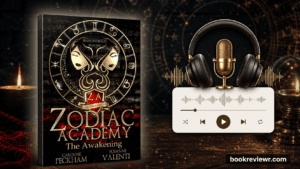
Fantasy romance readers are a passionate bunch, and when a series takes off in this community, it tends to do so with seismic force. That is exactly what happened with The Awakening, the first book in the wildly popular Zodiac Academy series, co-written by Caroline Peckham and Susanne Valenti. Published independently and initially discovered through word-of-mouth on BookTok and Bookstagram, the series has gone on to sell millions of copies worldwide — a staggering achievement for a self-published work.
This The Awakening review aims to give you a clear, honest, and thorough look at what makes this book tick — from its addictive characters and world-building to its pacing, writing style, and who will enjoy it most. Whether you are a long-time fan of dark academy fantasy or simply a reader curious about all the hype, read on.
About the Author
Caroline Peckham, alongside her co-author Susanne Valenti, represents one of the most remarkable success stories in modern independent publishing. Based in the UK, the pair have built an enormous, deeply loyal readership — largely without traditional publishing support — by delivering exactly what readers crave: morally grey characters, forbidden dynamics, found family, and plots that keep you turning pages long past midnight.
Their writing style leans into emotional intensity without apology. They are not interested in safe, sanitised storytelling. Their books explore jealousy, power, cruelty, and desire in ways that feel genuinely dangerous and utterly alive. For readers who have grown bored of predictable fantasy tropes, this is a refreshing — and often electrifying — change of pace.
The Awakening — Summary
At the heart of this The Awakening summary is a deceptively simple premise: twins Darcy and Tory Vega have spent their entire lives in the mortal world, unaware of their true magical heritage. When they are suddenly whisked away to Solaria — a world governed entirely by Fae — they discover that they are, in fact, the long-lost heirs to the throne.
That sounds like the beginning of a triumphant rise-to-power story. It is not. Instead, the Vega twins are thrown into Zodiac Academy, a cutthroat magical school where the four most powerful students — known as the Heirs — have no intention of allowing two unknown girls to threaten their status. What follows is a relentless, often brutal social and magical power struggle, wrapped in a slow-burn tension that makes it nearly impossible to put the book down.
Rather than spoon-feeding readers a hero’s journey, Peckham and Valenti drop you into a world with its own complex social hierarchy, political history, and magical system — and let you piece things together as the twins do. It is immersive, occasionally disorienting in the best way, and deeply engaging.
Main Characters in The Awakening
Thoughtful, empathetic, and fierce when pushed. Darcy is the twin readers tend to root for immediately — she leads with her heart but learns quickly that Solaria punishes softness.
Sarcastic, sharp-tongued, and relentlessly stubborn. Tory refuses to be intimidated and brings a darkly comedic energy that balances the book’s heavier moments.
One of the four ruling Heirs of the academy. Dangerously charming, deeply entitled, and far more layered than he appears at first glance.
Cold, commanding, and magnetic in a way that makes you deeply uneasy. Darius is the Heir with the most imposing presence and arguably the most complex arc across the series.
Unpredictable and wolfish — both literally and figuratively. Seth provides some of the series’ most entertaining and unsettling moments in equal measure.
The empath of the group, which sounds gentle until you realise he uses that power as a weapon. Max is deceptive precisely because he feels the most approachable.
What makes The Awakening characters particularly effective is that none of them are cardboard cutouts. Even the Heirs, who are explicitly positioned as antagonists, are given enough complexity that you find yourself curious about them rather than simply loathing them. The dual-perspective narration between Darcy and Tory keeps the reader grounded while still allowing for genuine surprises.
Key Themes and Messages
-
Power and its abuse
Solaria is a meritocracy built on magical strength, and Peckham uses this to explore how systems of power corrupt and how those at the top justify cruelty as natural order. The Heirs are not simply villains — they are products of a world that rewards dominance above all else.
-
Identity and belonging
Both twins have spent their lives as outsiders, shuffled through foster homes with no sense of roots. Discovering their heritage doesn’t give them instant belonging — it opens a new, more dangerous kind of displacement. This Awakening theme resonates powerfully with readers who have ever felt like they didn’t quite fit.
-
Sisterhood and loyalty
The bond between Darcy and Tory is the emotional backbone of the entire book. In a world that tries constantly to isolate and undermine them, their loyalty to each other is the one thing that feels unshakeable — and it makes the stakes feel genuinely personal.
-
Survival and resilience
The Vega twins are hazed, humiliated, and tested constantly. But the book doesn’t wallow in victimhood — it tracks their slow, hard-won adaptation and growing defiance. The resilience arc is genuinely satisfying without ever feeling rushed.
Writing Style and Narrative
One of the most important things to understand about this The Awakening analysis is that the writing is not literary fiction — and it was never meant to be. Peckham and Valenti write in a propulsive, dialogue-heavy style that prioritises momentum and emotional engagement above all else. The prose is accessible, punchy, and frequently funny, with Tory’s chapters in particular delivering lines that made me laugh out loud more than once.
The dual-perspective structure is well-executed. Both twins have distinct voices — Darcy more introspective and emotionally open, Tory more sardonic and externally focused — which prevents the alternating chapters from feeling repetitive. Each POV reveals different facets of the same world, and the authors resist the temptation to have both sisters always in the same place experiencing the same things.
Pacing is aggressive. There is almost no scene in this book that doesn’t either raise the stakes or deepen a relationship. If you are a reader who appreciates slow, contemplative world-building passages, you may find this style somewhat breathless. But for readers who want to feel locked in from page one, it works brilliantly.
What Makes The Awakening Special
There is no shortage of dark academy fantasy novels on the market, so what exactly makes this one stand out? A significant part of the answer lies in tone. Peckham and Valenti manage something genuinely difficult: they make you despise the Heirs and simultaneously find them compelling. The antagonists have real presence and personality — not just cruelty for cruelty’s sake, but a convincing ideological framework built around Fae supremacy and bloodline prestige.
The romantic tension is another major draw. This is not a book that rushes its ships — the enemies-to-lovers dynamics are built slowly and painfully, with enough genuine animosity to make any eventual softening feel earned rather than convenient. For readers who live for that electric push-pull chemistry, this book delivers.
Finally, there’s the world itself. Solaria is genuinely imaginative — the zodiac-based magical system, the social hierarchy of Fae Orders, and the political intrigue surrounding the throne all create a setting that feels layered and alive, with clearly much more still to be uncovered across future books.
Pros and Cons of The Awakening
Strengths
- Addictive, fast-paced storytelling that makes it near-impossible to stop reading
- Distinct, lovable dual protagonists with a genuinely powerful sibling bond
- Complex antagonists who resist easy categorisation
- A richly imagined magical world with a unique zodiac-based system
- Strong emotional resonance, particularly around identity and belonging
- Excellent slow-burn romantic tension with multiple compelling dynamics
Weaknesses
- Some readers may find the hazing sequences uncomfortable or excessive
- World-building can feel slightly rushed in the earlier chapters
- The writing style prioritises momentum over prose craft — not for literary fiction fans
- Book ends on a cliffhanger, which makes the series a significant time commitment
Who Should Read This Book
This book is an ideal read for fans of dark academy fantasy, particularly those who enjoy series like A Court of Thorns and Roses by Sarah J. Maas or From Blood and Ash by Jennifer L. Armentrout. If you love morally grey characters, enemies-to-lovers tension, and a world where the heroes are far from safe, this series is practically designed for you.
It is also a genuinely strong pick for readers who enjoy female-led stories centred around sisterhood and resilience — the Vega twins’ bond is one of the most emotionally satisfying aspects of the whole book, and it only deepens as the series progresses.
A note on content: this book contains bullying, hazing, and some dark themes that readers with sensitivities should be aware of. It is firmly in the adult fantasy romance category and is not aimed at younger readers.
Final Verdict
4 out of 5 — Highly Recommended
A bold, propulsive, and emotionally charged dark academy fantasy that fully earns its passionate fanbase.