Introduction
Disclosure: This post may contain affiliate links. We may earn a commission at no extra cost to you.
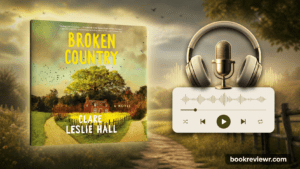
Some books arrive quietly and leave loudly. Broken Country by Clare Leslie Hall is exactly that kind of novel — a story that opens with the weight of a single sentence and refuses to let you go. “The farmer is dead. He is dead, and all anyone wants to know is who killed him.” That is how it begins. Not with a scene-setting paragraph or a leisurely introduction to the countryside. Just death, and the terrible question that follows it.
Published in 2025 and selected as a Reese’s Book Club Pick, Broken Country became a New York Times bestseller almost immediately upon release. It has accumulated over 60,000 ratings on Goodreads, where it holds an impressive score of 4.29. Readers describe it as mesmerizing, heartbreaking, and impossible to put down — and this Broken Country review will explain exactly why so many people feel that way.
Set against the rolling fields and stone walls of Dorset, England, this book will appeal to fans of literary fiction, slow-burn romance, and atmospheric mystery. If you loved The Paper Palace, Normal People, or Where the Crawdads Sing, then Hall’s debut is almost certainly your next great read.
About the author
Clare Leslie Hall is a novelist and journalist who makes her home in the wilds of Dorset — the very same landscape that breathes through every page of this book. Before writing under her full name, she published two domestic noir thrillers, Him and Mine, under the pen name Clare Empson. Both were released in the UK and Germany to positive reception. She has named LP Hartley’s The Go-Between as a formative influence, and readers who know that classic will recognize its DNA here: a forbidden love affair, the English countryside as both witness and judge, and consequences that ripple across generations.
Broken Country is her US debut, and it is the kind of arrival that announces an author whose best work may still be ahead of her. Hall writes with the earned confidence of someone who has spent years studying what makes a story breathe — the precise moment to withhold information, and the precise moment to deliver it. Her prose is quiet but never slack, elegant without being cold.
Broken Country summary
The story opens in a courtroom. Someone — we do not yet know who — is on trial for the murder of a farmer. Hall gives us that much, and then she pulls us into the past, trusting us to hold the tension of the present while the story of how we got here unfolds.
Beth is seventeen when she first meets Gabriel in the summer of the late 1950s in the fictional village of Hemston, Dorset. He is a young writer on the cusp of a literary career, and she is a farmer’s daughter still learning what she wants from life. Their connection is immediate and intense — a first love that neither of them is fully equipped to survive. When Gabriel leaves to pursue the future his mother has mapped out for him, Beth is left to pick up the pieces of herself.
Those pieces are gathered, gently, by Frank — a kind and steady farmer who loves Beth without condition. Together they build a good life on the land, alongside Frank’s brother Jimmy. But a decade later, Gabriel returns to the village with his young son Leo in tow, and nothing Beth thought she had settled about herself remains settled for long.
The novel moves across three timelines — the 1955 summer of first love, the 1968 return, and the present-day trial — and Hall manages these shifts with a precision that lesser writers rarely achieve. The Broken Country summary above is necessarily light on detail, because the pleasure of this book is in what you do not see coming. The mystery element is not a gimmick; it is the structural backbone of the entire emotional experience.
Main characters
Key themes and messages
A thorough Broken Country analysis must grapple with how densely layered its thematic content is, despite the apparent simplicity of its premise. This is not a book that wears its ideas on its sleeve, but they are there, woven into the fabric of every scene.
Writing style and narrative
One of the most striking things about this Broken Country analysis is how much Hall accomplishes with so little apparent effort. The prose does not announce itself. There are no passages that seem designed to impress; instead, there is a consistent, unhurried clarity that draws you through the story without ever making you aware of the mechanism doing the drawing.
Hall uses a third-person limited perspective, keeping us close to Beth without placing us entirely inside her thoughts. This creates a subtle distance — we observe Beth rather than becoming her — and it gives the novel its distinctive cool, reflective quality. The chapters are short. The pacing is quiet but steady, more like a literary thriller than traditional historical fiction.
The three-timeline structure is handled with a craftsman’s precision. Most novels that juggle past, recent past, and present-day courtroom scenes risk confusion or tonal inconsistency. Hall avoids both, using each timeline to answer a slightly different question and deploying transitions that feel earned rather than mechanical. The result is a reading experience that holds together even as it pulls in three temporal directions at once.
What makes Broken Country special
The opening line is one thing. But what truly separates Broken Country from the crowded field of literary romantic fiction is Hall’s refusal to make things easy for her characters — or her readers. She does not offer catharsis on schedule. The ending, which some readers describe as unexpected and others as quietly devastating, does not hand you the satisfaction you might have been quietly hoping for. It delivers something more honest: an ending that is exactly right for the story Hall chose to tell.
There is also the matter of empathy. Hall writes flawed people making genuinely bad decisions, and she gives you enough access to their interior lives that you understand — not excuse, but understand — why they do what they do. That is a harder trick than it sounds, and she pulls it off consistently across all four of her main characters.
The Dorset setting is rendered with the ease of someone who has actually walked those fields in winter. The small pub. The stone walls. The particular quality of light over a working farm. Readers who have never set foot in southwestern England will feel, by the final chapter, as though they have spent time there.
Pros and cons
Who should read this book
If you are drawn to novels that sit at the intersection of literary fiction and quiet suspense — books that trust you to feel what they do not need to state — then Broken Country is exactly the kind of read you have been looking for. Fans of The Paper Palace by Miranda Cowley Heller will find the emotional register immediately familiar. Readers who appreciated the rural atmosphere of Where the Crawdads Sing will feel equally at home in Dorset. And those who love the raw honesty of Sally Rooney’s romantic dynamics will find Hall working in a kindred spirit, albeit with a very different setting and time period.
It is also a strong recommendation for anyone who enjoys historical fiction grounded in ordinary, recognizable human experience rather than kings and battles. The England of the 1950s and 1960s that Hall creates is modest and real — a world of farms, village gossip, and the particular weight of choices made before you are old enough to fully understand them. Book clubs will find no shortage of material to discuss, from questions of blame and forgiveness to the novel’s handling of class, gender, and the price of keeping secrets.
Broken Country is a genuinely impressive debut on the American stage for Clare Leslie Hall. It is the kind of novel that earns its praise not through spectacle, but through sustained, patient skill. Hall knows how to build dread from tenderness. She knows how to make you care about people who are, on balance, making choices you would not make yourself. And she knows that the best endings are not always the happiest ones — just the truest. This book deserves every word of its success.