Introduction: Why Does It Hurt? Refuses to Sit Comfortably in Its Genre
Does It Hurt? by H.D. Carlton occupies an uneasy space in contemporary romance—one that refuses softness, avoids reassurance, and resists easy emotional resolution. While often grouped with dark romance or romantic suspense, the novel behaves differently than many of its genre neighbors. It doesn’t exist to comfort the reader. Instead, it watches them closely, daring them to stay present as discomfort accumulates.
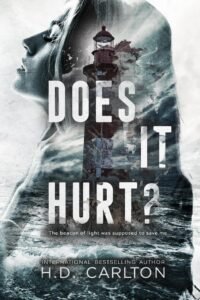
Carlton has a recognizable pattern as a writer. She is interested in characters who do not enter relationships cleanly or consensually in the emotional sense, even when consent exists on the surface. Her stories examine what happens when attraction collides with fear, when desire is tangled up with survival instincts, and when control becomes as intoxicating as affection. Does It Hurt? is perhaps one of her most concentrated explorations of these tensions.
This book stands out not because it escalates darkness for shock value, but because it slows down inside that darkness. The fear doesn’t rush. The intimacy doesn’t reassure. And the emotional payoff, when it arrives, feels complicated rather than triumphant. Readers aren’t guided toward safety; they’re asked to understand why danger can feel like shelter when the alternative is emotional emptiness.
What makes Does It Hurt? notable is its commitment to psychological realism within an exaggerated situation. The book does not ask whether the relationship is healthy in a textbook sense. It asks whether it feels inevitable to the people inside it—and why that inevitability can be both terrifying and seductive.
The Female Lead: A Study in Guarded Instinct and Emotional Hunger
The female protagonist in Does It Hurt? is not written to be immediately likable, and that choice is deliberate. She is observant, reactive, and deeply protective of her inner life. Rather than explaining herself to the reader, she reveals herself through avoidance, deflection, and small moments of internal panic that she rarely acknowledges outright.
Her defining trait is vigilance. She notices exits. She assesses tone shifts. She anticipates threat before it becomes explicit. This isn’t framed as paranoia but as learned behavior. Her emotional history—while not always fully verbalized—lingers in the way she moves through space and conversation. She doesn’t trust easily, but more importantly, she doesn’t trust the version of herself that wants to be close to someone else.
Emotionally, she is caught between craving intensity and fearing exposure. There is a sharp contrast between her internal desires and her outward restraint. She wants connection that feels overwhelming, even consuming, but she fears the loss of control that comes with being truly seen. This tension drives nearly every interaction she has, particularly with the male lead.
What makes her compelling is not resilience in the conventional sense, but adaptability. She doesn’t confront danger head-on. She studies it. She learns how to survive within it. When she gives ground, it is rarely because she is weak—it is because she is calculating the cost of resistance versus surrender.
Readers connect with her because her emotional contradictions feel familiar. Many people recognize the impulse to run from vulnerability while simultaneously resenting their own distance. Her internal logic is flawed but consistent, shaped by experience rather than idealism. Carlton allows her to make questionable choices without framing them as mistakes that need correction. Instead, they are portrayed as survival strategies that have outlived their usefulness but remain deeply ingrained.
Emotional Tension and the Architecture of Unease
The emotional tension in Does It Hurt? is built less through plot twists and more through sustained proximity. Carlton understands that discomfort intensifies when characters are forced into close quarters without emotional clarity. The setting plays a crucial role here, but the tension itself is psychological rather than situational.
The relationship dynamics operate on withheld information—both spoken and internal. Characters sense that something is wrong long before they can articulate what it is. This creates a constant undercurrent of unease that never fully dissipates, even during moments of intimacy.
What’s notable is how Carlton avoids traditional romantic pacing. There are no clean emotional beats where conflict rises and resolves neatly. Instead, tension accumulates unevenly. Some moments feel almost calm, only to be undercut by a single line of dialogue or a shift in physical proximity. The reader is never allowed to relax fully, mirroring the female lead’s emotional state.
Intimacy in the novel is not presented as safe or healing by default. It is charged, disorienting, and often destabilizing. Physical closeness becomes another form of exposure, another place where control can slip. This makes romantic scenes feel emotionally risky rather than indulgent, which is a defining characteristic of Carlton’s work.
The tension works because it is grounded in character psychology rather than external stakes alone. Even when danger is present, the most compelling question remains internal: what does it cost these characters to want each other?
Power Balance: Control as Currency
Power in Does It Hurt? is fluid, but never neutral. It shifts between characters depending on context, knowledge, and emotional leverage. Carlton is particularly interested in how power manifests through silence, restraint, and observation rather than overt dominance alone.
The male lead’s presence is unsettling not simply because of what he does, but because of what he withholds. He watches more than he speaks. He allows the female lead to fill in the blanks with her own fears and desires. This asymmetry of information becomes a form of control—one that feels more intimate than physical force.
At the same time, the female lead is not powerless. Her ability to endure, to adapt, and to read emotional undercurrents gives her a different kind of leverage. She understands fear intimately, which allows her to navigate it with a certain precision. When she chooses to stay rather than flee, it is not because she is unaware of the danger, but because she is making an emotional calculation that feels, to her, necessary.
The novel complicates traditional dominance dynamics by refusing to assign moral clarity to control. Power is not inherently villainous here, nor is submission portrayed as inherently virtuous. Instead, Carlton examines how power becomes eroticized when it intersects with unmet emotional needs.
This dynamic is particularly effective because it never settles into equilibrium. Just when one character seems to hold the upper hand, the emotional context shifts. Vulnerability becomes another kind of weapon. Desire becomes a liability. The reader is left constantly reassessing who is in control—and whether control even means safety.
Themes of Fear, Desire, and Identity
At its core, Does It Hurt? is a novel about fear—not just fear of physical harm, but fear of emotional annihilation. The characters are not simply afraid of each other; they are afraid of what connection demands of them.
Desire in the book is portrayed as intrusive. It arrives uninvited, disrupts rational thought, and challenges self-preservation instincts. Rather than romanticizing this disruption, Carlton allows it to remain uncomfortable. Wanting someone does not make the characters better versions of themselves; it exposes their worst impulses alongside their deepest longings.
Identity plays a quieter but equally important role. Both leads are grappling with fractured self-concepts shaped by past experiences. The relationship becomes a mirror that reflects parts of themselves they would rather avoid. For the female lead especially, being desired threatens the identity she has constructed around self-sufficiency and emotional distance.
Loyalty in the novel is ambiguous. It is not tied to moral goodness but to emotional necessity. Characters remain attached not because it is healthy or logical, but because leaving would require confronting emptiness they are not prepared to face.
What makes these themes resonate is Carlton’s refusal to resolve them cleanly. The novel does not suggest that love conquers fear or that desire leads to healing. Instead, it asks whether two damaged people can recognize each other’s fractures without turning them into weapons.
Why the Story Feels Emotionally Effective
The emotional effectiveness of Does It Hurt? lies in its restraint. Carlton does not overexplain character motivations or emotional shifts. She trusts the reader to notice patterns, contradictions, and silences.
Dialogue is used sparingly but intentionally. What characters don’t say often matters more than what they do. Internal monologue is present but not exhaustive, leaving room for interpretation. This creates a reading experience that feels participatory rather than directive.
The pacing supports this approach. The story unfolds in a way that mirrors emotional processing rather than narrative convenience. Some moments linger longer than expected; others pass quickly, leaving emotional residue behind. This unevenness feels intentional, reflecting how trauma and attraction disrupt linear thinking.
Importantly, the novel never asks the reader to approve of the relationship. It asks them to understand it. This distinction allows for emotional engagement without moral endorsement, which is crucial for a story operating in morally ambiguous territory.
Writing Style: Observational, Intimate, and Uncompromising
H.D. Carlton’s writing style in Does It Hurt? is deceptively simple. The prose does not draw attention to itself, but it is carefully calibrated. Sentences often carry emotional weight through implication rather than explicit statement.
There is a strong sense of physical presence in the writing. Settings are not described lavishly, but they feel inhabited. The environment presses in on the characters, reinforcing their isolation and emotional exposure. This grounding helps maintain tension without relying on constant action.
Carlton’s pacing choices reflect confidence. She allows scenes to breathe even when they are uncomfortable, trusting that discomfort is part of the reading experience rather than something to be alleviated. This approach may challenge readers accustomed to faster emotional resolution, but it rewards those willing to sit with ambiguity.
Why Does It Hurt? Resonates with American Readers
The success of Does It Hurt? with American readers can be understood within the broader context of evolving romance preferences. There is a growing appetite for stories that interrogate desire rather than idealize it, particularly among readers who feel underserved by traditional romantic narratives.
American romance audiences have increasingly embraced morally complex characters and relationships that resist easy categorization. Does It Hurt? aligns with this trend by offering intensity without reassurance. It respects the reader’s intelligence and emotional resilience, assuming they can engage with difficult material without needing it softened.
The novel also reflects a cultural interest in psychological realism. Rather than presenting trauma as something that can be healed through love alone, Carlton acknowledges its persistence. This honesty resonates with readers who recognize that emotional damage does not disappear simply because someone cares.
Additionally, the book’s refusal to moralize allows readers to form their own interpretations. This openness invites discussion, debate, and re-reading—qualities that contribute to sustained interest rather than fleeting consumption.
Conclusion: Sitting with the Question Rather Than Answering It
Does It Hurt? by H.D. Carlton is not a novel that offers closure in the traditional sense. It leaves questions unresolved, emotions unsettled, and moral boundaries blurred. This is not a flaw but a deliberate choice.
The book asks readers to sit with discomfort, to examine why certain dynamics feel compelling even when they are destabilizing. It does not promise redemption or transformation. Instead, it offers recognition—of fear, of desire, and of the complicated ways people seek connection when safety feels elusive.
For readers willing to engage thoughtfully, Does It Hurt? provides a deeply human exploration of intimacy at its most volatile. It is a story that lingers not because it satisfies, but because it challenges—and because it understands that some questions matter precisely because they resist easy answers.