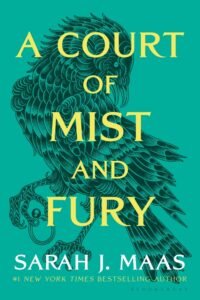
If you’ve read A Court of Thorns and Roses and found yourself enchanted by the lush world of Prythian, intense characters, and intricate romance, it’s natural to wonder what comes next. A Court of Mist and Fury by Sarah J. Maas is the much-anticipated second installment in the series, promising a deeper dive into the world of fae courts, complex politics, and emotional growth. Many readers pick it up because they want to continue following Feyre Archeron’s journey, curious about how her life evolves after the events of the first book. But the allure of A Court of Mist and Fury goes beyond continuity — it’s about experiencing a story that’s richer, more emotionally charged, and more expansive than its predecessor.
Fans of high-stakes fantasy romance are drawn to this book for its blend of magical intrigue, political maneuvering, and intimate personal stories. The book also appeals to readers who enjoy exploring themes of trauma, healing, and self-discovery within a vividly realized fantasy setting. With Maas’ signature ability to weave together tension, romance, and fantasy elements, A Court of Mist and Fury promises not only to continue the story but to take it in directions readers might not expect.
What the Story Feels Like — Tone & Vibe
Stepping into A Court of Mist and Fury is like walking into a world that is simultaneously beautiful and dangerous. The story balances light and shadow in a way that feels both emotionally and physically immersive. The tone is darker than the first book, reflecting Feyre’s internal struggles as well as the high stakes of the fae courts. There’s a lingering tension in almost every scene, a sense that decisions carry real consequences, and that every alliance, battle, or interaction could shift the balance of power.
The book has a cinematic quality — moments of quiet reflection are juxtaposed with grand, sweeping action sequences. There’s a haunting elegance to Maas’ worldbuilding in this installment; the night skies, sprawling palaces, and enchanted forests are described with meticulous attention to detail, giving the story a tangible atmosphere. Emotional tension pervades the narrative, giving readers a sense of immediacy and intimacy. The romance, while still central, feels more layered and mature, woven seamlessly into the broader narrative of self-discovery, healing, and political intrigue.
Unlike many sequels that merely extend the plot of the first book, A Court of Mist and Fury feels like a story with its own heartbeat. It is thoughtful, intense, and unafraid to explore darker emotional territory, giving it a depth that lingers with the reader.
Writing Style & Pacing
Sarah J. Maas’ writing style in A Court of Mist and Fury is immersive and descriptive without being unnecessarily verbose. She has a talent for blending lush worldbuilding with internal character reflection, so readers are as invested in Feyre’s thoughts and emotions as they are in the fantastical elements surrounding her. Dialogue is natural and often laced with wit or tension, making interactions feel alive rather than staged.
The pacing is deliberate but engaging. While there are extended moments of introspection that allow Feyre’s emotional journey to breathe, Maas intersperses these with high-intensity action sequences, romantic tension, and political scheming. This balance ensures that the story never stagnates; readers can pause to understand the nuances of Feyre’s growth while still feeling the momentum of the overarching plot. The book’s length allows for this duality: both the intricate internal world of Feyre and the expansive external world of Prythian are given the attention they deserve.
At times, the pacing leans toward slower exploration of emotions, especially in the first half, but this is intentional, allowing readers to connect deeply with Feyre’s struggles and growth. By the midpoint, the story gains momentum and delivers a series of revelations and turning points that carry the reader eagerly toward the conclusion.
Characters & Emotional Connection
Feyre Archeron is at the heart of A Court of Mist and Fury, and her character arc is perhaps the most compelling aspect of the book. She emerges from the first novel having survived traumatic experiences, and this installment explores the aftermath in a raw, unflinching way. Feyre’s journey is one of healing, self-discovery, and empowerment. She is vulnerable yet fiercely determined, and her internal conflicts feel authentic. Readers are given access to her fears, doubts, and desires, which creates a profound emotional connection.
Rhysand, the High Lord of the Night Court, is introduced more fully in this book, and his relationship with Feyre becomes a central focus. Unlike the first book, where certain dynamics were hinted at, here Maas gives Rhysand depth, complexity, and moral ambiguity that make him a fascinating character. The romance between Feyre and Rhysand feels earned, with tension, trust-building, and mutual respect playing key roles in their evolving bond.
Other supporting characters, from Mor to Cassian and Azriel, are developed further in this installment. Their personalities, backstories, and interactions enrich the story without overwhelming it, making the Night Court feel like a living, breathing society. The camaraderie and loyalty among characters add both emotional weight and moments of levity, balancing the darker elements of the narrative.
The emotional resonance of the book is enhanced by Maas’ skill in exploring trauma, trust, and self-worth. Readers are invited to experience Feyre’s pain and triumphs intimately, which makes every challenge and victory deeply satisfying.
Themes and Real-Life Relevance
While A Court of Mist and Fury is firmly rooted in fantasy, its themes have significant real-life relevance. The book tackles trauma and healing in a way that is both sensitive and compelling. Feyre’s journey demonstrates that recovery is not linear, that self-worth must often be reclaimed, and that boundaries and trust are essential to personal growth. These are universally relatable themes, particularly for readers navigating their own challenges.
Empowerment is another central theme. Feyre is no longer merely surviving; she is learning to define her own path, make independent choices, and assert herself in a world that often underestimates or threatens her. This resonates with anyone seeking stories about personal agency and growth.
The book also explores themes of loyalty, friendship, and love — not just romantic love, but platonic bonds that provide support and strength in times of adversity. Maas balances these emotional themes with political intrigue and moral complexity, reflecting the way real-life decisions often have consequences for both individuals and communities.
Best Part of the Book (In My Opinion)
For me, the most memorable aspect of A Court of Mist and Fury is its emotional depth. The moments where Feyre confronts her fears, grapples with her past, and begins to claim her own power are both heartbreaking and inspiring. The romance, while central, is deeply intertwined with character development rather than being a superficial plot device.
The scenes that stand out most are often quiet — conversations, reflections, or intimate moments of trust between Feyre and Rhysand. They carry as much weight as the high-stakes battles or political intrigue because they show character growth, emotional resilience, and the slow-building trust that is central to the narrative.
Additionally, the expansion of the Night Court and its culture adds layers of intrigue and fascination. The world feels larger, more alive, and full of possibilities, making the journey not just about Feyre but about the broader dynamics of power, loyalty, and society within Prythian.
A Small Honest Criticism
While A Court of Mist and Fury is compelling, it is not without minor flaws.
-
Pacing in the First Half: The first half of the book can feel slow due to extensive introspection and character reflection. Some readers may wish for more immediate action, especially after the fast-paced conclusion of the first book.
-
Romantic Focus: While the romance is beautifully developed, it occasionally dominates certain sections, leaving less room for deeper exploration of secondary plotlines or political intrigue. Some readers seeking more external conflict may feel a slight imbalance.
These points are minor in the context of a book that offers such emotional richness and worldbuilding, but they are worth noting for readers with specific expectations.
Who Should Read It + Who May Skip It
Should Read:
-
Fans of fantasy romance with complex emotional arcs
-
Readers who enjoy character-driven stories and themes of healing and empowerment
-
Those who want immersive worldbuilding, intrigue, and high-stakes action
May Skip:
-
Readers looking for light, fast-paced fantasy without heavy emotional themes
-
Those who prefer minimal romance or prefer external conflict to dominate the plot
-
Younger readers sensitive to trauma, violence, or mature themes
A Court of Mist and Fury is targeted toward older teens and adult readers due to its mature content, emotional intensity, and complex romantic themes.
Final Verdict
A Court of Mist and Fury by Sarah J. Maas is a richly layered, emotionally resonant fantasy novel. It successfully expands the world of Prythian while deepening Feyre’s personal journey in a way that is raw, relatable, and empowering. The combination of romance, political intrigue, personal growth, and high-stakes adventure creates a story that is immersive and compelling from start to finish.
While the pacing in the first half is slower and the romance sometimes dominates, these minor drawbacks are outweighed by the book’s strengths. The character development, particularly Feyre’s evolution and her relationship with Rhysand, is executed with care and depth, making readers feel invested in every triumph and challenge.
If you are drawn to fantasy that combines emotional depth, romance, and adventure, A Court of Mist and Fury is an unforgettable journey. It is more than a sequel; it is a story that stands on its own, exploring themes of healing, empowerment, and trust in a world where magic and danger coexist.