Introduction: A Romance That Breaks Sacred Ground
Disclosure: This post may contain affiliate links. We may earn a commission at no extra cost to you.
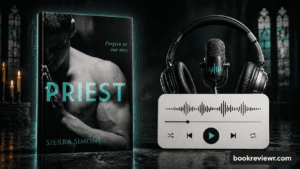
Some books arrive quietly. Priest does not. Sierra Simone’s debut novel — and the first entry in what would become the New Camelot universe — burst onto the romance scene with a premise so audacious it made even seasoned genre readers pause before turning the first page. It is a love story about sin, a confession that never quite ends, and a man of God whose faith is tested not by doubt, but by desire.
The Priest review conversation that exploded across BookTok and romance reader communities was not accidental. This novel earned its cult following through sheer emotional force: raw prose, morally complex characters, and a romance that asks, without flinching, whether love and faith can coexist when the rules say they must not. If you have been seeing this title everywhere and wondering whether the hype is justified — the short answer is yes, with important caveats about content.
This is not a book for everyone, and Simone knows that. But for readers willing to engage with its themes seriously, Priest offers something most romance novels never attempt: genuine spiritual and emotional weight woven into an intensely physical story.
About the Author: Sierra Simone
Sierra Simone is an American romance author known for writing stories that push the conventional boundaries of the genre. With a background that reportedly includes a graduate education in religious studies, Simone brings a rare depth to spiritual themes that most romance authors either avoid entirely or treat superficially. That academic grounding is evident on every page of Priest.
Her writing style is immediately distinctive — lyrical without being overwrought, explicit without being gratuitous, and emotionally honest in ways that can feel almost uncomfortable. Simone understands that the best forbidden romances work because the characters themselves understand why the boundaries exist and choose to cross them anyway. That moral self-awareness separates her work from simpler “bad boy” narratives.
Beyond the Priest Duet, Simone has expanded the New Camelot universe considerably, writing interconnected books that revisit the same cast of characters. She also writes under other pen names in different genres, but Priest remains her most discussed and widely read work. For fans of authors like Penelope Douglas, Rina Kent, or Tillie Cole who want something with greater literary ambition, Simone is an essential discovery.
Priest Summary: Sin in the Confessional
A Priest summary must begin with what makes the setup so immediately charged: Father Tyler Anselm Bell — young, devout, genuinely committed to his vows — begins hearing the confessions of a woman named Poppy Danforth. He never sees her face. He only hears her voice. And what she confesses to, week after week, is not what you might expect from a church confessional.
Poppy’s confessions are intimate and provocative, and Father Bell finds himself unable to separate the spiritual duty of hearing them from a growing, agonizing attraction. When circumstances bring them face to face outside the confessional — and when it becomes clear that Poppy has her own complicated feelings — the collision between faith, duty, desire, and identity becomes inevitable.
“The confessional is not where this story begins — it is where the wound opens. The rest of the book is the bleeding.”
The Priest summary cannot do full justice to the emotional architecture of the plot. Simone builds tension with tremendous patience. This is not a book that rushes to its climax — it lingers in the ache of wanting something that feels both sacred and forbidden. The second half accelerates considerably, and the emotional payoffs, when they arrive, land with genuine force. Note that the story continues directly into its sequel, Sinner, so readers should be prepared for an incomplete resolution.
Main Characters in Priest
The Priest characters are its greatest strength. Simone resists the temptation to flatten either protagonist into a convenient archetype, and the result is two people who feel genuinely complicated.
Tyler is not a hypocrite or a fraud. He is a man who chose the Church willingly, who loves God sincerely, and who finds himself in an impossible war between vocation and desire. His internal narration is the novel’s greatest achievement — articulate, self-aware, and genuinely tortured. He is not a dark anti-hero performing anguish; he is a good man in an impossible situation.
Poppy is far more than a temptress figure. She arrives at the confessional carrying her own grief, her own spiritual hunger, and her own contradictions. She is educated, perceptive, and fully aware of the consequences of what she feels for Tyler. Simone gives her interiority even though the novel is told from Tyler’s perspective, and she emerges as a complete character in her own right.
Sean functions as Tyler’s secular mirror — the life Tyler might have lived. His relationship with his brother adds warmth and grounding to a story that could otherwise feel claustrophobically intense, and he plays a more significant role as the New Camelot series expands.
Key Themes and Messages
The Priest themes are richer than the premise might suggest, and this is where Simone’s background in religious studies pays obvious dividends.
Faith as a Living Thing
The novel does not treat religion as decoration or as an obstacle to be conveniently swept away. Tyler’s faith is real, robust, and deeply personal. Simone takes Catholic theology seriously — concepts like vocation, sanctifying grace, and the sacrament of confession are not background noise but central to how Tyler understands himself. The conflict works precisely because his faith is genuine, not performative.
The Anatomy of Forbidden Desire
One of the most sophisticated aspects of the Priest analysis is how Simone frames desire not as weakness but as information. Tyler’s attraction to Poppy does not diminish his faith — it illuminates a conflict that was already present between what he chose and who he is. The novel suggests that suppression and authenticity cannot permanently coexist, and it handles that argument with uncommon care.
Confession as Intimacy
The confessional structure is brilliant. Poppy and Tyler develop an intimate emotional vocabulary before they ever meet face to face. Their relationship begins in truth-telling — in confession — and that foundation gives their eventual physical connection an emotional weight it might not otherwise have earned.
Writing Style and Narrative Craft
The Priest analysis would be incomplete without addressing Simone’s prose, which is the novel’s most immediately arresting quality. She writes in close first person from Tyler’s perspective, and the voice she constructs for him is extraordinary — educated, spiritually fluent, and capable of genuine lyricism without ever becoming purple or self-indulgent.
Her pacing deserves specific mention. The first half of the novel operates almost entirely through anticipation — through not-yet and almost and the exquisite agony of proximity. Readers who prefer faster-burning romances may find this approach demanding, but those who surrender to the rhythm will find it deeply rewarding. The tension Simone builds is architectural: each scene adds weight to what comes after.
The explicit content, when it arrives, is handled with the same seriousness as the theological material. This is not shock value; it is the logical, emotionally earned continuation of everything the novel has been building. Simone never lets the physical scenes feel disconnected from the characters’ inner lives, which is rarer than it should be in the genre.
“Simone writes sin the way a theologian might — as something with weight, with consequence, and with its own terrible beauty.”
What Makes Priest Special
In a genre saturated with forbidden romance, Priest distinguishes itself through intellectual honesty. Most books in this subgenre use the forbidden element as a plot device — a rule that exists to be broken quickly and forgotten faster. Simone refuses that shortcut. The prohibitions in this novel have real weight because they are grounded in a coherent belief system that the protagonist genuinely holds.
The novel also benefits from its unusual narrative intimacy. Because we experience the entire story through Tyler’s consciousness, we understand his conflict from the inside. We don’t observe his faith — we inhabit it. That proximity makes his eventual choices feel genuinely consequential rather than inevitable from page one.
Additionally, Simone treats her romance as worthy of serious engagement. She doesn’t wink at the reader or signal that the theology is just set dressing. The result is a book that operates simultaneously as erotica, as a character study, and as a genuine meditation on the competing claims of vocation and desire. That trifecta is extraordinarily difficult to execute, and the fact that Simone pulls it off in a debut novel is remarkable.
Pros and Cons of Priest
- Exceptional, literary-quality prose
- Psychologically complex, believable protagonist
- Genuine theological depth and research
- Builds tension with rare patience and skill
- Emotionally earned explicit scenes
- Poppy is a fully realized love interest
- Establishes a rich fictional universe
- Ends without full resolution (requires sequel)
- Slow first-act pacing may lose some readers
- Very explicit — not suitable for all tastes
- Faith elements may unsettle some readers
- Poppy’s interiority limited by POV choice
Who Should Read This Book
The target audience for Priest is adult romance readers who want more from the genre than surface-level escapism. If you have ever closed a forbidden romance feeling vaguely unsatisfied by how easily the characters navigated consequences, this book is specifically the corrective you need.
Readers who appreciate the emotional intensity of authors like Colleen Hoover — while wanting something with more explicit content and greater thematic ambition — will find Simone’s work deeply satisfying. Similarly, readers who enjoyed the moral complexity of Beautiful Disaster or Unteachable should find Priest a natural next step.
It is worth being clear about what this book is not for. Readers who prefer clean or inspirational romance, those sensitive to explicit religious content in a sexual context, or anyone expecting a lighthearted enemies-to-lovers dynamic should look elsewhere. Simone is not writing for those readers, and her book is better for it.
Ideal for: adult romance readers, dark romance fans, readers interested in morally complex narratives, those curious about faith-vs-desire themes, and anyone who has grown tired of forbidden romances that don’t take their own premises seriously.