1) Short intro — why someone might pick up this book
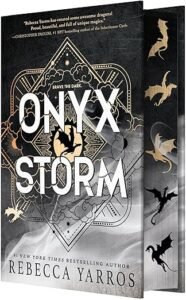
If you made it this far into Rebecca Yarros’s Empyrean series, Onyx Storm probably called your name the moment it was announced. This is the book readers reach for when they want higher stakes, darker choices, and consequences that don’t disappear by the next chapter. It’s also the kind of sequel people start with excitement and finish with that quiet, stunned feeling.
Disclosure: As an Amazon Associate, I earn from qualifying purchases. This post may also contain affiliate links at no extra cost to you.
2) What the story feels like (tone & vibe)
Onyx Storm feels heavier than what came before. Not slower—just deeper. The tone leans darker, more intense, and more emotionally charged. There’s a constant sense of pressure, like everything is slightly off-balance and could snap at any moment. The war feels real here, not just as a backdrop but as something that shapes every conversation, decision, and relationship.
There’s also a strong undercurrent of grief and fear. Characters are carrying the weight of past choices, lost friends, and truths they can’t unlearn. The book doesn’t rush those feelings. Instead, it lets them sit uncomfortably, which honestly fits the story well. Even quieter moments feel tense, like the calm before something terrible—or inevitable.
Romantically, the vibe is intense but more grounded. The connection between characters isn’t just about attraction anymore; it’s tangled with trust, power, and survival. If you’re curious about the Onyx Storm spice level, it’s present and meaningful, but it doesn’t overpower the plot. It feels earned rather than added for shock value.
3) Writing style & pacing (how the author tells the story)
Rebecca Yarros’s writing in Onyx Storm feels more confident and controlled. The prose is still accessible and easy to read, but there’s more emotional layering than before. She’s very good at short, sharp lines during high-stress moments and slower, more reflective passages when characters are forced to sit with their decisions.
Pacing-wise, the book starts strong and doesn’t waste time. The first third pulls you in fast, then the middle stretches out a bit to develop character arcs and political tension. Some readers might feel that middle section lingers longer than expected, but it serves a purpose. It builds dread. By the time the final act hits, everything feels primed to explode.
Action scenes are clear and immersive without being confusing. You always know what’s at stake and who’s in danger. Yarros also does a solid job balancing large-scale conflict with personal moments, which keeps the story from feeling like nonstop chaos.
4) Characters & emotional connection
The characters are where Onyx Storm really shines. Violet continues to grow in ways that feel realistic rather than convenient. She’s stronger, yes, but also more burdened. Power comes with costs, and this book doesn’t shy away from showing that. Her internal struggles feel just as important as the external battles.
Xaden remains a complicated presence. His role in Onyx Storm is less about mystery and more about reckoning—with himself, with Violet, and with the choices he’s made. Their relationship feels tested in believable ways. It’s not just external forces pulling them apart; it’s fear, secrets, and the reality of what they represent to the world around them.
Side characters also get more room to breathe. Some surprised me with how emotionally attached I became to them, especially during moments of loyalty and sacrifice. Even characters you might not fully trust are written with enough depth that you understand why they act the way they do, even when you don’t agree.
5) Themes and real-life relevance
At its core, Onyx Storm is about power—who deserves it, who survives it, and what it costs to hold onto it. The book asks uncomfortable questions about leadership, moral compromise, and whether doing the “right” thing always exists in war.
Another strong theme is trust. Not just between lovers, but between friends, leaders, and institutions. Characters are forced to decide who they believe when the truth is fragmented or inconvenient. That struggle feels surprisingly relatable, especially in a world where information and loyalty are rarely simple.
There’s also a quiet but persistent exploration of trauma. No one walks away from violence unchanged here. The book acknowledges that healing isn’t linear and that strength doesn’t mean being unaffected.
6) Best part of the book (in your opinion)
The emotional payoff is the best part of Onyx Storm. This book doesn’t rely on constant twists to keep you engaged. Instead, it builds tension through relationships and hard choices. When big moments finally land, they hit hard because you understand exactly what’s being risked.
I also loved how consequences actually stick. Actions from earlier books matter here, and not everyone gets an easy out. That sense of permanence makes the story feel more mature and grounded than many fantasy romances.
7) A small honest criticism (1–2 points)
The middle section can feel a bit dense. There’s a lot of internal reflection and political maneuvering, which may slow things down for readers who prefer nonstop action.
Additionally, a few side plot threads feel underdeveloped. They’re interesting, but I wished the book had spent just a little more time exploring them instead of leaving them mostly implied.
😎 Who should read it + who may skip it
You should read Onyx Storm if:
-
You’re already invested in the Empyrean series and want deeper character growth
-
You enjoy fantasy that leans emotional and morally complex
-
You’re curious about the Onyx Storm spice level but want story first, romance second
You might want to skip it if:
-
You prefer light, fast-paced fantasy with minimal emotional weight
-
You’re only reading for romance and not the larger political or war-driven plot
9) Final verdict (natural ending)
Onyx Storm by Rebecca Yarros feels like a turning point rather than just another sequel. It’s heavier, messier, and more emotionally demanding, but that’s what makes it work. The book trusts its readers to sit with discomfort and uncertainty, and it rewards that patience with meaningful character moments and lasting impact.
This isn’t a story you forget right after finishing. It lingers, especially the quieter scenes and the choices that can’t be undone. If you’ve followed Violet’s journey this far, Onyx Storm feels like a necessary step—one that raises the stakes and makes the future of the series feel genuinely unpredictable.