Introduction
Disclosure: This post may contain affiliate links. We may earn a commission at no extra cost to you.
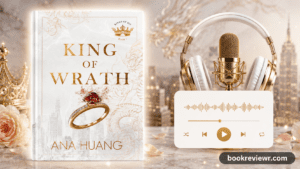
Some books grab you by the collar on page one and don’t let go until you’ve read the last sentence in a breathless rush at two in the morning. King of Wrath by Ana Huang is exactly that kind of book. It arrived in 2022 with the quiet confidence of a story that knows what it is — glamorous, emotionally charged, and unabashedly addictive — and it delivered on every promise the cover made.
Dark romance as a genre can be hit or miss. When it works, it creates a tension so electric you can almost feel it through the pages. When it doesn’t, the power dynamics feel hollow and the emotional payoff never lands. Huang walks that tightrope with impressive skill here, crafting a story that’s equal parts escapism and emotional depth. This King of Wrath review digs into everything: what works, what doesn’t, and why so many readers have made it a permanent fixture on their re-read shelf.
About the Author
Ana Huang is a USA Today and international bestselling author known primarily for her Twisted series, which cemented her status as one of contemporary romance’s most bankable names. She writes stories set in high-society worlds filled with morally gray heroes, strong heroines, and plots that blend steamy romance with genuine emotional stakes. Her prose has a cinematic quality — she writes scenes the way directors frame shots, and her dialogue crackles with wit and subtext.
With the Kings of Sin series, Huang shifted slightly darker in tone, leaning into arranged marriages, elite power structures, and heroes who carry real wounds beneath their polished exteriors. King of Wrath is the first book in that series, and it establishes the world and its stakes with total confidence.
King of Wrath Summary (Spoiler-Light)
At its core, this is a story about two strangers forced together — and what happens when the walls they’ve both built come down one brick at a time. Dante Russo is one of the most powerful men in the world. Ruthless, controlled, and accustomed to getting exactly what he wants, he enters into an arranged marriage with Vivienne Kent, the daughter of a prominent family. The match is purely strategic — business and legacy, nothing more.
Vivienne, for her part, isn’t thrilled about the arrangement either. She’s smart, poised, and carrying her own set of secrets. She didn’t choose Dante, and she has no interest in performing happiness for a man who barely acknowledges her as a person. What follows is a slow, simmering negotiation — two people learning to see each other clearly, then wishing they could unsee everything that understanding stirs up.
The King of Wrath summary sounds familiar on paper: enemies to lovers, forced proximity, arranged marriage. But Huang layers these tropes with character specificity and emotional honesty that makes the story feel genuinely fresh rather than derivative.
Main Characters
Dante Russo could easily have been a cardboard cutout — the ice-cold billionaire with a dark past. What saves him is that Huang never lets him be purely cruel without consequence, and she takes the time to show us where his walls came from. His wrath isn’t random. It’s shaped. By the time we understand what drives him, it doesn’t excuse his behavior, but it deepens it in ways that make his eventual vulnerability feel earned rather than convenient.
Vivienne is the more immediately likable of the two, but she’s never written as simply reactive. She has agency, desires, and a history that influences every choice she makes. She’s not waiting around to be saved or softened — she’s navigating a situation she didn’t ask for with as much dignity and self-awareness as she can manage. That makes her fascinating to follow.
The secondary characters are well-placed without overpowering the central dynamic. They serve the story, add texture to the world, and set up future books in the series without the reader feeling like they’re sitting through extended previews.
King of Wrath Themes and Messages
The King of Wrath themes run deeper than the genre packaging might suggest. On the surface, this is a story about desire and power. But underneath that, it’s about vulnerability as a choice — and the terrifying courage it takes to make it.
Both Dante and Vivienne have learned, in different ways, that showing your true self is dangerous. The world they inhabit — elite, transactional, appearance-obsessed — rewards performance and punishes weakness. The romance works because falling for each other forces them to stop performing, and neither of them is prepared for what that costs.
There’s also a quieter thread about inherited trauma and how the wounds passed down through families shape the way we love or refuse to. Dante carries his father’s legacy in ways he’s only partially aware of. Watching him reckon with that — especially once Vivienne refuses to accept the version of him he’s decided to present to the world — is some of the most genuinely moving material in the book.
Family expectations, the price of ambition, and what it means to choose a person rather than simply end up with one all surface throughout the King of Wrath analysis. These aren’t just plot accessories — they’re what give the romance its emotional weight.
Writing Style and Pacing
Ana Huang writes with clarity and momentum. Her chapters are propulsive without feeling rushed, and she has a real instinct for when to slow down — for the charged silences, the almost-moments, the conversations where everything important is left unsaid. The prose isn’t showy, but it’s purposeful. Every scene does work.
The pacing of the romance itself is one of the book’s greatest strengths. The tension builds steadily, never spiking artificially or resolving too early. By the time Dante and Vivienne’s dynamic shifts, the reader has been waiting long enough to feel genuinely rewarded. There’s craft in that kind of restraint, and Huang executes it well.
The dual POV structure lets readers inside both characters’ heads without ever making the dynamic feel too transparent. Part of what makes enemies-to-lovers work is uncertainty — you need to believe, at least a little, that it might not work out. The way Huang manages information between the two perspectives keeps that uncertainty alive longer than most authors manage.
What Makes King of Wrath Special
In a genre where the arranged-marriage trope appears roughly every other week, King of Wrath distinguishes itself through emotional intelligence. It’s not just about the heat — though there’s plenty of that — it’s about two people who are genuinely difficult to love learning how to be loved anyway.
Huang also avoids the trap of making the hero’s redemption arc feel like a transaction. Dante doesn’t suddenly become a different person because love fixes him. He changes because he chooses to change, and the work of that choice is visible on the page. That honesty is what makes his arc satisfying rather than simply convenient.
The world-building, while not the primary focus, is rich enough to make the setting feel real. The world these characters inhabit — old money, new power, ruthless ambition dressed in beautiful clothes — is rendered with enough specific detail to feel immersive without ever becoming a distraction from the central relationship.
Pros and Cons
- Dante’s arc feels genuinely earned
- Vivienne is a fully realized protagonist
- Slow-burn tension is handled masterfully
- Thematic depth beyond the genre surface
- Clean, propulsive prose with emotional precision
- Dual POV used to great effect
- Dante’s early behavior may test some readers’ patience
- Secondary characters occasionally feel thinly sketched
- High-society setting won’t land for everyone
- Some tropes are familiar territory for genre veterans
Who Should Read It
If you’ve ever loved an enemies-to-lovers story and wished the emotional payoff hit harder, this book is for you. Readers who enjoyed Huang’s Twisted series will find familiar pleasures here, elevated by a slightly darker and more emotionally complex execution. Fans of authors like Lucy Score, Helena Hunting, or Penelope Ward who enjoy their romance with genuine heart beneath the heat should find a lot to love.
Those who struggle with morally gray heroes or slow-burn dynamics that sit in discomfort for a while before resolving should go in prepared. Dante is not immediately easy to root for. That’s the point — but it’s worth knowing in advance.